 http://www.dianaalhadid.com/
Saturday, August 4, 2012

Sunday, July 29, 2012
Eleanor Antin and Judy chicago in California Get the scoop in this article in Flash art magizine.
http://www.flashartonline.com/interno.php?pagina=articolo_det&id_art=884&det=ok&title=ELEANOR-ANTIN-JUDY-CHICAGO
http://www.flashartonline.com/interno.php?pagina=articolo_det&id_art=884&det=ok&title=ELEANOR-ANTIN-JUDY-CHICAGO
Interested in who is collecting art. Check out this article in Art News and get up to speed on who is collecting what.
http://www.artnews.com/2012/06/26/the-artnews-200-top-collectors/
http://www.artnews.com/2012/06/26/the-artnews-200-top-collectors/
Artists
1. Mona Hatoum - Here's an interesting interview with her from BOMB:
http://bombsite.com/issues/63/articles/2130


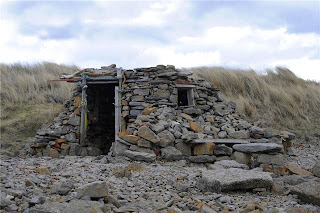
2. Sally Madge - Here's a link to a great article about one her pieces:
http://libcom.org/blog/lindisfarne-shelter-sally-madge-04032011

3. Jessica Stockholder - Born in Seattle, raised in Vancouver, she was featured in Art21's episode "Play". The concept of play is one that I'm thinking about in my work right now.


http://bombsite.com/issues/63/articles/2130


2. Sally Madge - Here's a link to a great article about one her pieces:
http://libcom.org/blog/lindisfarne-shelter-sally-madge-04032011


3. Jessica Stockholder - Born in Seattle, raised in Vancouver, she was featured in Art21's episode "Play". The concept of play is one that I'm thinking about in my work right now.


Bonnie Hartford Price exhibits very beautiful paintings. Very Turneresque. but with more vivd color.
http://www.artistsites.org/bonniebardos/
http://www.artistsites.org/bonniebardos/
Kay Yourist studios. So close to home. Good to see great art in Michigan
http://www.youristpottery.com/
http://www.youristpottery.com/
Marta Matray Gloviczki ceramics. simply beautiful and Wabi-Sabi
http://www.angelfire.com/mn2/marta/pix4.html
http://www.angelfire.com/mn2/marta/pix4.html
http://www.patrickshiacrabb.com/
Patrick Crabb's ceramic has a ancient mysterious quality. Check out the viedo of his work on the link
Patrick Crabb's ceramic has a ancient mysterious quality. Check out the viedo of his work on the link
Mary Giehl. It was great to see her work in the gallery as DCCA. It was also great to see the Facility. What a great concept.http://www.thedcca.org/exhibit/functioning-system
Monday, July 23, 2012
garbage art
http://www.nytimes.com/2012/07/24/nyregion/in-new-york-sanitation-dept-garage-an-art-gallery.html?_r=1&hp
interesting garbage art that I want to see next time I am in nyc
interesting garbage art that I want to see next time I am in nyc
nrg Teresita Fernandez

Teresita Fernández's work has explored issues in contemporary art related to problems of perception and the fabrication of the natural world.

nrg Tania Kovats

“The landscapes that interest me the most are geologically explicit landscapes where you can clearly read the narrative of formation or erosion. This leads me to landscapes that are often remote – cliff edges, deserts, odd geological incidents… The way our experience of landscape is culturally mediated is of central concern to me. Much of my thinking over the last few years has meant I have looked to geology to help read landscape to further understand how landscapes are made outside of what we affect upon them. No landform exists forever but only within a particular time span in the earth’s history. I see landscape as a series of incidents coming into being.”


James Casebere
James Casebere: Since the 1980s, James Casebere’s photographs have transported viewers
into ambiguous, evocative, and surreal environments. Casebere’s process
involves constructing tabletop models out of modest materi¬als, such as
Styrofoam, plaster, and cardboard. He then dramatically lights these
constructions and care¬fully positions his camera to manipulate the
com¬position and the mood of the resulting photograph. Devoid of human
figures, the constructions invite viewers to project into and inhabit
the space. (From the 2010 Whitney Biennial website)


David Park

David Park (1911–1960) is one of those artists who isn’t widely known but whose work inspires a special loyalty and warmth of feeling among his admirers. The partisan flavor his very name can arouse is partly dependent, of course, on his not being a household name to begin with. But Park, who was based in Berkeley, California, and was, along with Richard Diebenkorn and Elmer Bischoff, one of the leading lights of what has been called “Bay Area” painting in the 1950s, makes some of us always eager to see more of his work and learn more about him because his best pictures have a particular tenderness and sense of gravity—a note that sets him apart from near-contemporaries of his such as Alice Neel, Fairfield Porter, or Alex Katz. (From the web)
Matthew Monahan

Matthew Monahan’s work presents a futuristic archaeology. Drawing from a wide range of influences, from Modernist art to ancient totems, Monahan’s ‘artefacts’ are both familiar and strange. Filtering historical mythologies through his own personal system of reference, altered further through the experience of making, Monahan’s work alludes to a contemporary spirituality, where beauty and brutality coalesce as virtual monuments. In Riker’s Island, Monahan adorns his vitrine with hand-crafted ‘relics’. Nondescript and clunky, their plausible function is secondary to their materiality: wax, paper, and plaster take on barbaric forms, their temporal media humorously suggesting timelessness. Their precious value is guarded by an over-sized sculptural ‘shard’: a monolithic goddess modernised and flat-packed in 2 dimensional card. Through his assemblages, Monahan offers a dark mysticism, where material trickery and abstracted form resurrect forgotten primal instincts. (note: from the Saatchi Gallery website)
Thomas Houseago

Thomas Houseago’s figurative sculptures appear physically imposing and powerful in their size and positioning yet fragmented and vulnerable in their construction. To build these works, Houseago begins with a structure of iron rods and then adds a variety of traditional sculptural materials such as plaster, hemp, and wood. Some of his works incorporate graphite or charcoal sketches of faces and anatomy on plaster and wood panels.
Monstrous yet unthreatening, this work— a part-human, part-animal being—is in a transitional pose between walking and crawling, weighted on the flat expanses of its plaster hands and feet. Houseago’s combination of sculpting and drawing challenges conventional aesthetic boundaries between three-dimensionality and flatness, monumentality and spontaneity. (from the 2010 Whitney Biennial website)
A few new friends: Huma Bhabha

Huma Bhabha: Assembled from mundane materials and scraps of detritus, Huma Bhabha’s My Skull Is Too Small resembles an array of masks or totems. Abstracted fragments of human features—eyes, ears, and legs—coalesce uneasily, as if they are still in the process of being formed or already in a state of decay. The sculpture’s stylized composition and areas of roughly worked clay evoke archaic monuments ravaged by time. Yet the tangled chicken wire and spraypainted Styrofoam blocks that protrude beneath the clay surfaces locate the piece in the present or even in some imaginary dystopian future. The pedestal of this work, with its graffiti marks and collage elements, suggests a shipping crate. Bhabha often describes her sculptures as “characters” that project psychological depth through traces of violent use and references to the history of figurative sculpture. Although the distressed materials in her work can allude to catastrophe, they also convey a paradoxical sense of renewal. (From the 2010 Whitney Biennial website)
Subscribe to:
Posts (Atom)